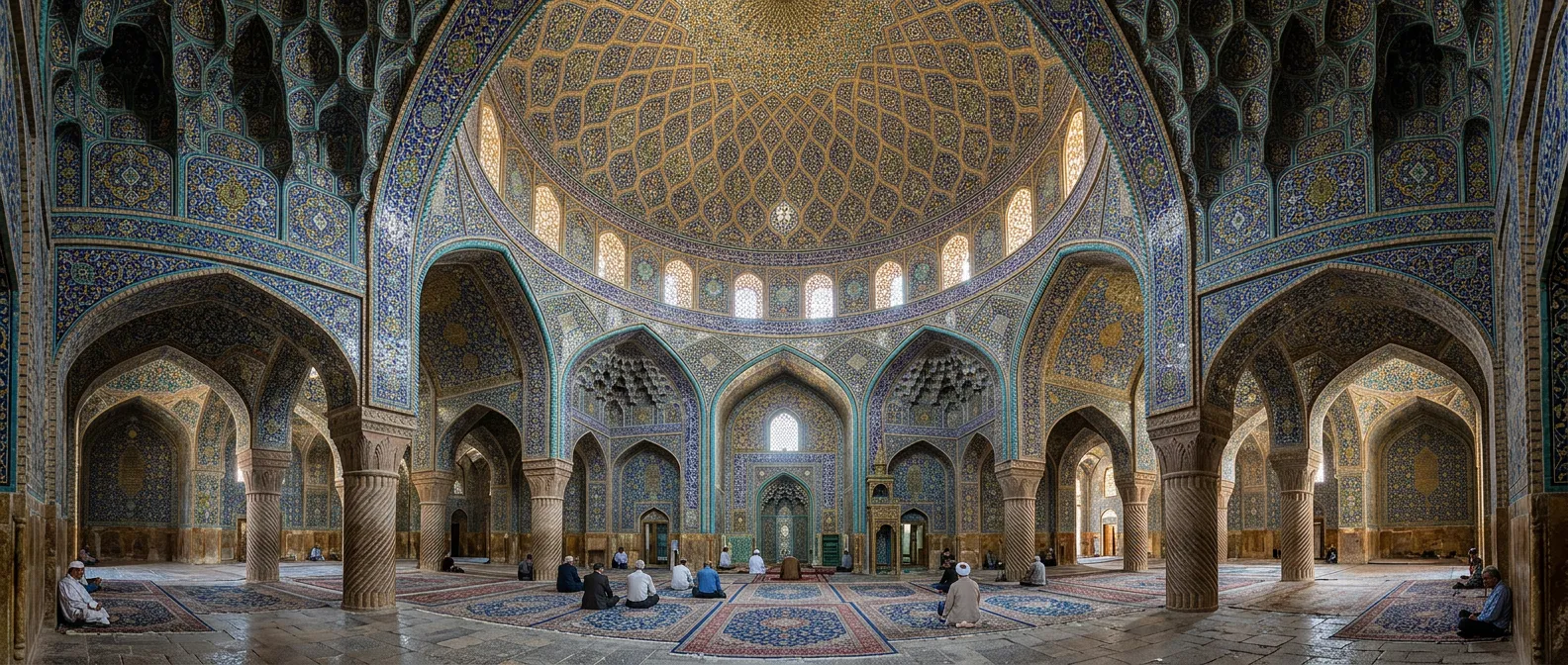
Iran’s Pilgrimage Visa (Ziarat) allows Muslim visitors to enter the country for religious purposes – primarily to visit the holy shrines of Mashhad, Qom, Shiraz, and Rey. Iran is home to some of the most important Shia Islamic sites in the world, drawing millions of pilgrims annually from Iraq, Pakistan, India, Afghanistan, Azerbaijan, Lebanon, and beyond. This guide covers eligibility, costs, documents, the application process, and the key pilgrimage destinations you can visit.
What Is the Iran Pilgrimage Visa (Ziarat)?
The Iran Pilgrimage Visa – commonly called the Ziarat visa (from the Arabic/Persian word for “visitation” or “pilgrimage”) – is a special-purpose visa designed for Muslim travelers who wish to visit Iran’s sacred religious sites. It falls under Iran’s broader visa category system managed by the Ministry of Foreign Affairs (MFA).
Unlike the standard tourist visa, the Ziarat visa is specifically intended for religious travel. In practice, many pilgrims also use the regular tourist visa to visit shrines, but the Ziarat visa offers distinct advantages: it is often facilitated through specialized religious travel agencies, can be processed faster during peak pilgrimage seasons, and sometimes comes with reduced fees for group travel.
Key Features of the Pilgrimage Visa
- Purpose: Visiting holy shrines and religious sites in Iran
- Duration: Typically 30 days, extendable in some cases
- Eligible travelers: Muslim pilgrims (some sources indicate non-Muslims can visit most sites but the visa itself is pilgrimage-focused)
- Group travel: Commonly arranged through authorized Ziarat tour operators
- Peak seasons: Muharram, Safar, Ramadan, and the weeks surrounding Arba’een (for Iraq-bound pilgrims transiting Iran)
- Entry points: Mainly by air (Mashhad, Tehran, Shiraz) or overland from Iraq, Pakistan, and Afghanistan
Who Can Apply for an Iran Pilgrimage Visa?
Citizens of most Muslim-majority countries are eligible to apply for the Ziarat visa. The largest groups of pilgrims come from:
| Country / Region | Estimated Annual Pilgrims | Main Entry Point |
|---|---|---|
| Iraq | 2,000,000+ | Overland (Mehran, Khosravi) |
| Pakistan | 500,000+ | Air (Mashhad, Tehran) and overland (Taftan) |
| Afghanistan | 300,000+ | Overland (Dogharoun, Milak) |
| Azerbaijan | 200,000+ | Overland (Astara, Jolfa) |
| India | 100,000+ | Air (Mashhad, Tehran) |
| Lebanon | 50,000+ | Air (Tehran, Mashhad) |
| Bahrain / Kuwait / UAE | 50,000+ | Air (Mashhad, Shiraz) |
Nationality restrictions apply. Citizens of Israel are not eligible for any Iranian visa. Citizens of the United States, United Kingdom, and Canada face additional restrictions and must apply through an Iranian embassy – they cannot use the e-Visa portal and may need to travel with an authorized tour guide at all times. If you hold one of these passports, review our Iran visa requirements guide for detailed embassy procedures.
Iran’s Major Pilgrimage Destinations
Iran hosts several of the holiest sites in Shia Islam. Here are the key shrines and cities that Ziarat visa holders visit:
Mashhad – Shrine of Imam Reza
The Imam Reza Shrine in Mashhad is the largest mosque in the world by area and the holiest site in Iran. It houses the tomb of Imam Ali al-Ridza, the eighth Shia Imam. Mashhad receives over 20 million domestic and international pilgrims annually, making it one of the most visited religious cities on earth.
Key sites in Mashhad:
- Imam Reza Shrine Complex – The main attraction, covering 598,000 square meters
- Goharshad Mosque – A 15th-century mosque adjacent to the shrine
- Nader Shah Tomb – Historical monument near the shrine
- Kooh Sangi – A park and recreation area for pilgrims between visits
Qom – Shrine of Fatima Masumeh
Qom is the second-holiest city in Iran and a major center of Shia Islamic scholarship. The Shrine of Fatima Masumeh (sister of Imam Reza) draws millions of pilgrims each year. The city is also home to dozens of seminaries and the famous Hawza (theological school).
Shiraz – Shah Cheragh
The Shah Cheragh (King of Light) shrine in Shiraz is a stunning mausoleum and mosque complex housing the tombs of brothers Ahmad and Muhammad, sons of the seventh Shia Imam. Its interior, covered in mirror mosaics, is one of Iran’s most visually spectacular religious sites.
Rey (Tehran) – Shah Abdol-Azim Shrine
Located just south of Tehran, the Shah Abdol-Azim Shrine in Rey is the burial site of a descendant of Imam Hasan. It is a popular pilgrimage destination for those arriving in Tehran and is easily accessible by metro.
Karbala Transit – Arba’een Pilgrimage
Every year, millions of Shia pilgrims travel through Iran to reach Karbala and Najaf in Iraq for the Arba’een pilgrimage (the 40th day after the martyrdom of Imam Hussein). Many pilgrims use the Ziarat visa to enter Iran and then cross into Iraq at the Mehran or Khosravi border crossings. Iran serves as the primary transit corridor for pilgrims from Pakistan, Afghanistan, India, and other Asian countries heading to Karbala.
How to Apply for an Iran Pilgrimage Visa
There are two main pathways to obtain a Ziarat visa:
Option 1: Through a Ziarat Travel Agency (Recommended)
The most common and easiest method for pilgrimage travel is through an authorized Ziarat tour operator. These agencies specialize in religious travel to Iran and handle the entire visa and trip arrangement process.
How it works:
1. Choose a licensed Ziarat travel agency in your country
2. Provide your passport details and travel dates
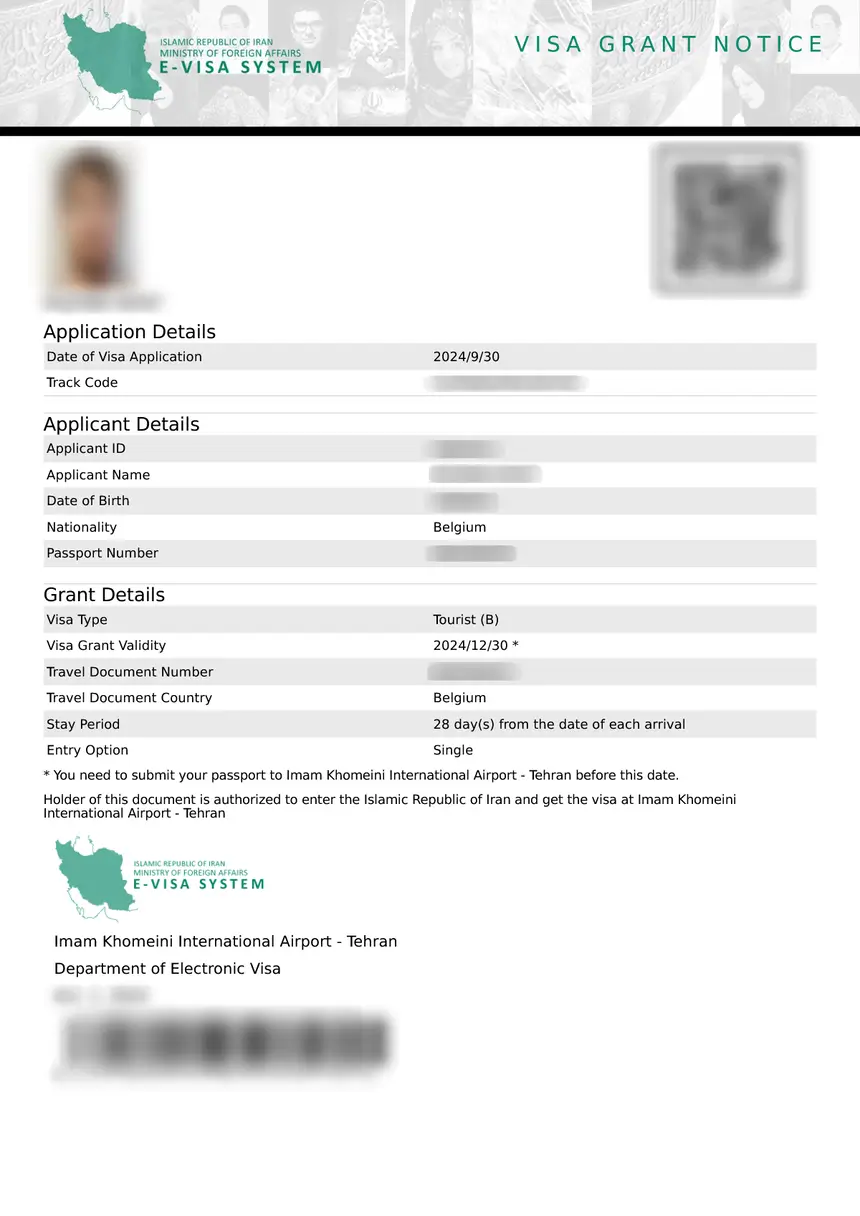
3. The agency submits a Visa Grant Notice application to the MFA on your behalf
4. You receive a reference number within 5-10 business days
5. Complete the visa application at the nearest Iranian embassy or through the e-Visa portal using the reference number
6. Collect your visa and travel to Iran with the group or independently
Advantages: Agencies handle hotel bookings near shrines, ground transportation between cities (Mashhad-Qom-Shiraz), group discounts, and Arabic/Urdu/Persian-speaking guides.
Option 2: Apply Independently Online
If you prefer to travel independently, you can apply for a pilgrimage visa through the MFA e-Visa portal:
- Visit evisa.mfa.ir
- Create an account and fill in your personal details
- Select “Pilgrimage” or “Ziarat” as your visa type (if available; otherwise select “Tourist”)
- Upload the required documents
- Submit and wait for approval (typically 3-10 business days)
- Print the approval notice and present it on arrival
Note: Not all nationalities can apply independently. Pilgrims from Pakistan, Afghanistan, and Iraq are often advised to apply through agencies due to faster processing and embassy coordination. For a step-by-step guide to the online application, see our Iran visa application walkthrough.
Option 3: Visa on Arrival at Mashhad Airport
Pilgrims arriving at Mashhad International Airport (MHD) can sometimes obtain a visa on arrival, though this is not guaranteed. The VOA process at Mashhad is similar to other Iranian airports – you apply at the airport visa counter, pay the fee, and wait for approval. However, arriving without a pre-approved visa carries the risk of denial. We strongly recommend obtaining your visa in advance. See our Iran visa on arrival guide for details.
Documents Required for Iran Pilgrimage Visa
The documentation for a Ziarat visa is similar to other Iranian visa types, with some additional requirements for religious travel:
Standard documents:
- Valid passport with at least 6 months validity remaining
- Completed visa application form
- Two recent passport-size photographs (white background)
- Travel insurance valid for Iran (minimum EUR 14 for 30 days)
Pilgrimage-specific documents:
- Invitation letter or reference number from an authorized Ziarat travel agency (if applying through an agency)
- Proof of pilgrimage purpose – a letter from your local mosque or religious organization confirming your intention to perform Ziarat (sometimes required, depending on nationality)
- Flight itinerary showing arrival and departure dates
- Hotel booking confirmation in Mashhad, Qom, or your pilgrimage destination
For a complete list of requirements organized by nationality, see our Iran visa requirements guide.
Iran Pilgrimage Visa Fees
The cost of a Ziarat visa is comparable to the standard Iranian tourist visa and varies by nationality:
| Nationality Group | Visa Fee (EUR) | Agency Package (EUR, incl. hotels & transport) |
|---|---|---|
| Pakistani | 40-60 | 300-500 |
| Indian | 40-80 | 350-600 |
| Afghan | 30-50 | 200-400 |
| Iraqi | 30-50 | 150-300 |
| Azerbaijani | 40-60 | 250-450 |
| Lebanese | 50-80 | 300-500 |
| European | 50-80 | 400-700 |
Additional costs to budget for:
- Travel insurance: EUR 14-30 for 30 days
- Agency service fee: EUR 20-50 (if using a travel agency for visa processing)
- Internal transportation: EUR 30-80 for intercity buses or domestic flights (Mashhad to Qom is ~900 km)
- Meals and incidentals: EUR 10-20 per day
Many Ziarat travel agencies offer all-inclusive packages that cover visa processing, flights, hotels near shrines, ground transportation, and meals. These packages are often cheaper than arranging everything independently, especially for group travel.
For a detailed breakdown of visa fees by nationality, see our Iran visa fee guide.
Pilgrimage Routes and Itineraries
Most Ziarat pilgrims follow one of these popular routes:
Classic Iran Ziarat Circuit (7-10 days)
- Tehran/Rey – Shah Abdol-Azim Shrine (1 day)
- Qom – Shrine of Fatima Masumeh, Jamkaran Mosque (1-2 days)
- Isfahan – Historical mosques and bazaars (1-2 days, optional)
- Shiraz – Shah Cheragh Shrine, Nasir al-Mulk Mosque (2 days)
- Mashhad – Imam Reza Shrine Complex (2-3 days)
Arba’een Transit Route (variable)
- Arrive in Tehran or Mashhad
- Visit Mashhad shrine
- Travel to Kermanshah or Ilam (western Iran)
- Cross into Iraq at Mehran or Khosravi border
- Continue to Karbala for Arba’een (40th day of Imam Hussein’s martyrdom)
This route is heavily used during the 20-day period leading up to Arba’een. Border crossings can be extremely crowded – expect delays of 6-12 hours. Iran temporarily eases visa requirements during this period for some nationalities.
Short Mashhad Ziarat (3-5 days)
For pilgrims who only wish to visit the Imam Reza Shrine:
1. Fly directly to Mashhad
2. Spend 2-4 days at the shrine complex and surrounding religious sites
3. Return home from Mashhad
This is the most popular option for pilgrims from Pakistan, India, and the Gulf states.
Extending Your Pilgrimage Visa
If you need more time for your pilgrimage, you can extend your Ziarat visa while in Iran:
- Visit the Police Department of Aliens Affairs (Edareh Gozarnat) in Mashhad, Qom, Tehran, or Shiraz
- Bring your passport, current visa, and a letter explaining the reason for extension
- Pay the extension fee (typically EUR 20-30)
- Extensions are granted for 15-30 additional days
Pilgrimage visa extensions are generally straightforward, especially if you can show an ongoing religious itinerary. For more details, see our Iran visa extension guide.
Tips for Ziarat Pilgrims Visiting Iran
- Book early during peak season: Muharram, Safar, Ramadan, and the Arba’een period see massive influxes of pilgrims. Hotels near the Imam Reza Shrine in Mashhad can sell out weeks in advance.
- Dress modestly: Iran enforces an Islamic dress code. Women must wear a headscarf and loose-fitting clothing. Men should avoid shorts in shrine areas.
- Shrine etiquette: Remove shoes before entering shrine complexes. Photography may be restricted in certain areas. Separate prayer areas exist for men and women.
- Currency: Bring EUR or USD cash. International bank cards do not work in Iran due to banking sanctions. Exchange money at official exchange offices (sarafi), not at the airport.
- Language: Farsi is the main language. In Mashhad, many shopkeepers and hotel staff speak Urdu and Arabic due to the high volume of pilgrims from Pakistan and Iraq.
- Domestic flights: Iran has affordable domestic flights connecting major pilgrimage cities. A Tehran-to-Mashhad flight costs around EUR 30-60 and takes 1.5 hours versus 10 hours by bus.
- Halal food: All food in Iran is halal by default. Vegetarian options are limited but available in larger cities.
- Travel insurance: Mandatory for all visitors. Basic coverage starts at EUR 14 for 30 days. Ensure your policy covers Iran specifically, as some international insurers exclude it.
FAQs About Iran Pilgrimage Visa
Do I need to be Muslim to get an Iran pilgrimage visa?
The Ziarat visa is intended for Muslim pilgrims visiting holy shrines. Non-Muslims can visit most of Iran’s historical and religious sites on a standard tourist visa, though access to certain inner shrine areas may be restricted. If you are not Muslim but wish to visit Iran’s religious sites, apply for a regular tourist visa instead.
Can I visit Karbala (Iraq) through Iran on a pilgrimage visa?
Yes, many pilgrims use Iran as a transit route to reach Karbala and Najaf in Iraq, especially during Arba’een. You enter Iran on your Ziarat visa, visit Mashhad or other shrines, then cross into Iraq at the Mehran or Khosravi border. You will need a separate Iraqi visa unless your nationality qualifies for Iraq’s Arba’een visa waiver.
How much does an Iran Ziarat visa cost?
The visa fee ranges from EUR 30-80 depending on your nationality, similar to the standard tourist visa. All-inclusive agency packages (visa, flights, hotels, transport) range from EUR 150-700 depending on your country of origin, duration, and accommodation level.
How long does it take to get a pilgrimage visa for Iran?
Processing through a travel agency typically takes 5-10 business days for the reference number, plus 3-7 additional days for the visa itself. Applying independently through the e-Visa portal takes 3-10 business days. Embassy applications take 7-14 business days. Start the process at least 3-4 weeks before your planned travel date.
Can Pakistani citizens get an Iran pilgrimage visa easily?
Yes, Pakistan is one of the largest sources of Ziarat pilgrims to Iran. Pakistani citizens can apply through authorized Ziarat travel agencies in major cities (Karachi, Lahore, Islamabad, Quetta). The overland route via the Taftan border crossing is popular for budget travelers. Visa processing for Pakistani nationals typically takes 7-14 business days.
Is the Arba’een pilgrimage visa different from a regular Ziarat visa?
During the Arba’een period, Iran sometimes eases visa requirements for pilgrims transiting to Iraq. Some nationalities can obtain a free or reduced-fee transit visa specifically for the Arba’een march. Check with your local Iranian embassy or a Ziarat travel agency for the current year’s Arba’een visa policy, as it changes annually.
Can I extend my pilgrimage visa while in Iran?
Yes, you can extend your Ziarat visa at the Police Department of Aliens Affairs in major cities like Mashhad, Qom, Tehran, or Shiraz. Extensions are typically 15-30 days and cost EUR 20-30. Bring your passport, current visa, and a brief explanation of why you need more time.
What is the best time of year for Ziarat in Iran?
The most spiritually significant times are Muharram (month of mourning for Imam Hussein), the last 10 days of Ramadan, and the 20 days leading to Arba’een (late September to October). However, these are also the most crowded periods. For a less crowded experience with pleasant weather, visit in spring (March-May) or autumn (October-November).