Iran’s Medical Visa (Type T) lets foreign nationals enter the country specifically for healthcare treatment at approved hospitals and clinics. Iran has become a leading medical tourism destination in the Middle East, offering affordable surgeries, organ transplants, and specialized treatments at internationally accredited facilities. This guide covers eligibility, required documents, application steps, and what to expect when seeking medical care in Iran.
What Is the Iran Medical Visa?
The Iran Medical Visa, classified as Type T by the Iranian Ministry of Foreign Affairs (MFA), is a special-purpose visa issued to foreign nationals who need to enter Iran for medical treatment. Unlike the tourist visa or business visa, the medical visa requires a formal invitation from an Iranian healthcare provider.
Iran’s healthcare system has grown significantly in recent years. The country has over 900 hospitals, many equipped with modern technology. Specialized fields such as cardiology, orthopedics, ophthalmology, fertility treatments, organ transplants, and cosmetic surgery attract tens of thousands of medical tourists annually – particularly from Iraq, Afghanistan, Azerbaijan, Oman, and other neighboring countries.
Key Features of the Medical Visa
- Visa code: T (Medical)
- Purpose: Healthcare treatment at recognized Iranian medical facilities
- Duration: Aligned with the treatment plan, typically 30-90 days
- Extendable: Yes, with a letter from the treating hospital
- Multiple entry: Possible, depending on treatment needs
- Companion visa: Attendants can apply for a separate visa to accompany the patient
Who Can Apply for an Iran Medical Visa?
Citizens of most countries can apply for an Iran Medical Visa. However, eligibility depends on several factors:
Nationalities that can apply online through the e-Visa system:
Most nationalities are eligible to apply electronically. The MFA e-Visa portal accepts applications for medical visas from citizens of most countries worldwide.
Nationalities requiring embassy application:
Citizens of the United States, United Kingdom, Canada, and a few other countries must apply through an Iranian embassy or consulate. These nationalities cannot use the e-Visa portal and typically face longer processing times. If you hold one of these passports, see our Iran visa requirements guide for detailed embassy application procedures.
Important note: Citizens of Israel are not eligible for any type of Iranian visa.
Documents Required for Iran Medical Visa
The medical visa has more specific documentation requirements than a standard tourist visa. You will need:
Standard documents:
– Valid passport with at least 6 months validity remaining
– Completed visa application form (online or paper)
– Two recent passport-size photographs (white background, 35x45mm)
– Travel insurance valid for Iran (minimum EUR 14 for 30 days coverage)
Medical-specific documents:
– Medical referral letter from a hospital or doctor in your home country describing your condition and the recommended treatment
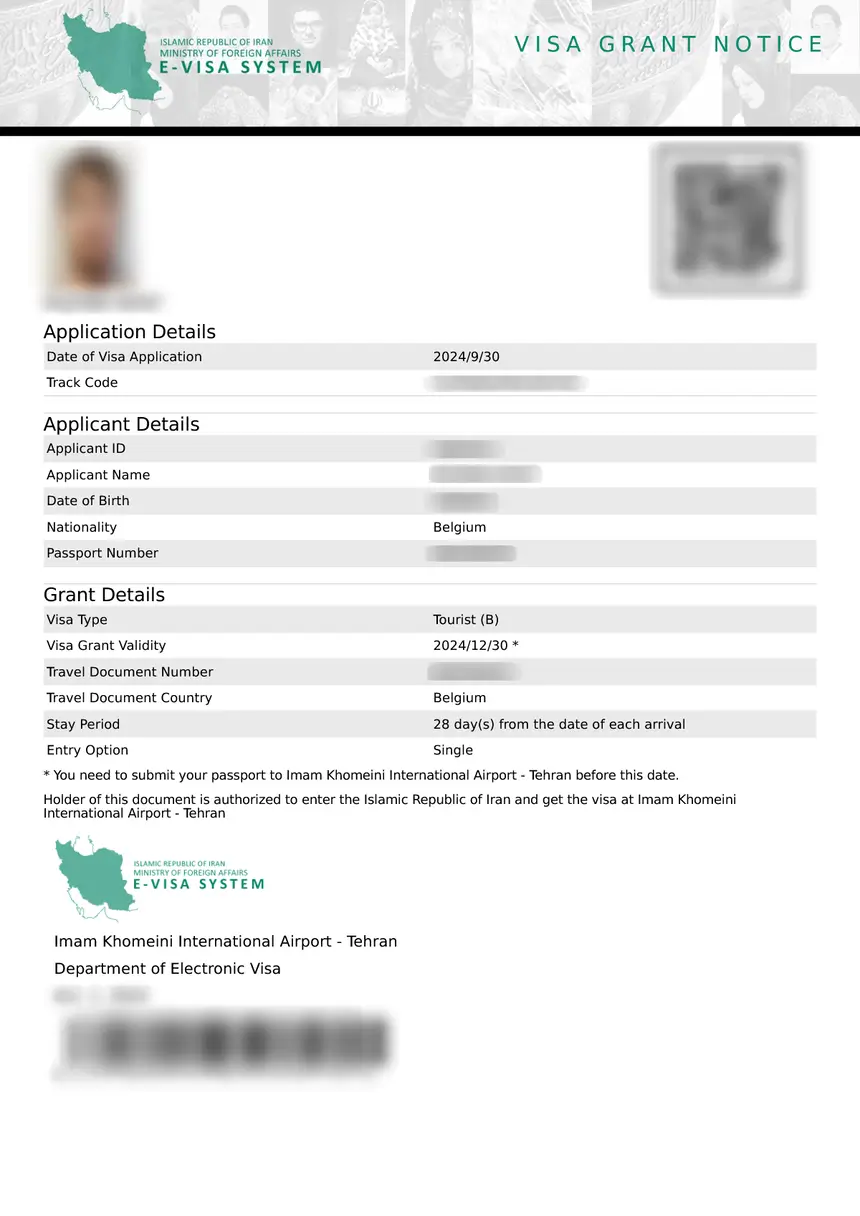
– Invitation letter (Visa Grant Notice) from a recognized Iranian hospital or medical center confirming they will provide treatment
– Medical records relevant to your condition (translated to English or Farsi if necessary)
– Proof of financial means to cover treatment costs and living expenses in Iran
The invitation letter from the Iranian hospital is the most critical document. Without it, your medical visa application cannot proceed. The hospital typically handles the initial application through the MFA system on your behalf.
How to Apply for an Iran Medical Visa
The application process for a medical visa follows these steps:
Step 1: Choose an Iranian Hospital
Research and select an Iranian hospital or medical center that specializes in your required treatment. Many Iranian hospitals have international patient departments with English-speaking staff. Popular hospitals for medical tourism include:
- Milad Hospital (Tehran) – Multi-specialty
- Shahid Beheshti Heart Center (Tehran) – Cardiology
- Farabi Eye Hospital (Tehran) – Ophthalmology
- Royan Institute (Tehran) – Fertility and reproductive medicine
- Namazi Hospital (Shiraz) – Multi-specialty and transplants
- Imam Reza Hospital (Mashhad) – Multi-specialty
Step 2: Obtain the Hospital Invitation
Contact the hospital’s international patient department. Send your medical records and referral letter. If the hospital accepts your case, they will:
- Issue an official invitation letter
- Submit a Visa Grant Notice application to the MFA on your behalf
- Provide you with a reference number to track your application
This step typically takes 5-10 business days.
Step 3: Complete the Visa Application
Using the reference number from the hospital, complete your visa application:
- Online: Visit the MFA e-Visa portal and select “Medical” as your visa type. Enter the reference number and upload your documents.
- At an embassy: If you cannot apply online, visit the nearest Iranian embassy with your documents and the hospital’s reference number.
Step 4: Wait for Approval
Processing times for medical visas are generally faster than tourist visas because the Iranian government encourages medical tourism. Expect 3-7 business days for e-Visa applications and 7-14 business days for embassy applications.
Step 5: Collect Your Visa
Once approved, you can collect your visa:
– E-Visa: Print the approval notice and present it on arrival at the Iranian airport
– Embassy visa: Collect the physical visa sticker from the embassy
For a complete overview of the general application process, see our Iran visa application guide.
Iran Medical Visa Fees
Medical visa fees vary by nationality, similar to other Iranian visa types:
| Nationality Group | Approximate Fee (EUR) |
|---|---|
| South Asian (India, Pakistan, Bangladesh) | 40-60 |
| Southeast Asian (Malaysia, Indonesia) | 40-60 |
| Middle Eastern (Iraq, Oman, UAE) | 40-80 |
| European | 50-80 |
| African | 40-70 |
| Australian / New Zealand | 60-80 |
These fees are for the visa itself. They do not include:
– Hospital treatment costs
– Travel insurance
– Translation of medical documents
– Companion visa fees (if applicable)
For a detailed fee breakdown by nationality, see our Iran visa fee guide.
Medical Treatments Available in Iran
Iran offers a wide range of medical treatments that attract international patients:
| Treatment Category | Common Procedures | Average Savings vs. Western Countries |
|---|---|---|
| Cardiac Surgery | Bypass, angioplasty, valve replacement | 60-75% |
| Orthopedic Surgery | Knee/hip replacement, spinal surgery | 50-70% |
| Ophthalmology | LASIK, cataract surgery, corneal transplant | 50-65% |
| Fertility Treatments | IVF, ICSI, egg donation | 40-60% |
| Organ Transplants | Liver, kidney, bone marrow | 50-70% |
| Cosmetic Surgery | Rhinoplasty, facelift, liposuction | 50-70% |
| Dental Care | Implants, veneers, orthodontics | 40-60% |
| Cancer Treatment | Chemotherapy, radiation, surgery | 45-65% |
Note: Iran is particularly well-known for rhinoplasty (nose surgery) – the country has one of the highest rates of nose surgery per capita in the world.
Extending Your Medical Visa in Iran
If your treatment requires a longer stay than your initial visa permits, you can extend your medical visa while in Iran:
- Visit the Police Department of Aliens Affairs (Edareh Gozarnat) in the city where you are receiving treatment
- Bring your passport, a letter from the treating hospital confirming ongoing treatment, and your current visa
- Pay the extension fee (typically EUR 20-30)
- Extensions are usually granted for 15-30 days at a time
Medical visa extensions are generally easier to obtain than tourist visa extensions because the treating hospital’s recommendation carries significant weight. For more details on the extension process, see our Iran visa extension guide.
Tips for Medical Travelers to Iran
- Start early: Begin the visa process at least 4-6 weeks before your planned treatment date
- Get travel insurance: Ensure your insurance covers medical complications. Basic Iran travel insurance starts at EUR 14 for 30 days
- Arrange airport transfer: Many Iranian hospitals offer free airport pickup for international patients
- Bring a companion: Having a family member or friend makes the experience smoother – they can apply for a companion visa
- Keep copies: Carry photocopies of all medical documents, your passport, and visa
- Currency: Bring EUR or USD cash. International credit cards do not work in Iran due to banking sanctions
- Language: Major hospitals have English-speaking staff, but consider hiring a translator for interactions outside the hospital
FAQs About Iran Medical Visa
Can I apply for an Iran medical visa online?
Yes, most nationalities can apply for an Iran medical visa through the MFA e-Visa portal at evisa.mfa.ir. You will need a reference number from an Iranian hospital. Citizens of the US, UK, and Canada must apply through an embassy instead.
How long does it take to get an Iran medical visa?
E-Visa applications are typically processed in 3-7 business days. Embassy applications take 7-14 business days. The initial hospital invitation process adds another 5-10 business days before you can even start the visa application.
Can I bring a companion on an Iran medical visa?
Yes, companions can apply for a separate visa to accompany the patient. The Iranian hospital can issue invitation letters for both the patient and their attendant. The companion applies through the same process but selects a different visa category.
How long can I stay in Iran on a medical visa?
The initial medical visa is typically issued for 30-90 days, depending on the treatment plan outlined by the hospital. Extensions are available if the treatment requires a longer stay.
Is Iran safe for medical treatment?
Iran has well-equipped hospitals, many with international accreditation. The country performs over 400,000 surgeries annually for international patients. However, as with any medical tourism, research the specific hospital and doctor thoroughly before committing to treatment.
What happens if my medical visa is rejected?
Medical visa rejections are relatively uncommon when the hospital invitation and documentation are in order. If rejected, the most common reasons are incomplete documentation, passport validity issues, or nationality restrictions. You can reapply after addressing the issue.