The Iran eVisa is an electronic travel authorization that allows foreign nationals to apply for a visa online without visiting an embassy or consulate. This comprehensive guide covers every aspect of the Iran eVisa process, from eligibility and requirements to application steps, fees, processing times, and frequently asked questions.
What Is the Iran eVisa?
The Iran eVisa (also known as the Iran electronic visa or MFA visa) is an online visa application system managed by the Iranian Ministry of Foreign Affairs (MFA). It was introduced to simplify the visa process for tourists, business travelers, and other visitors who wish to enter the Islamic Republic of Iran.
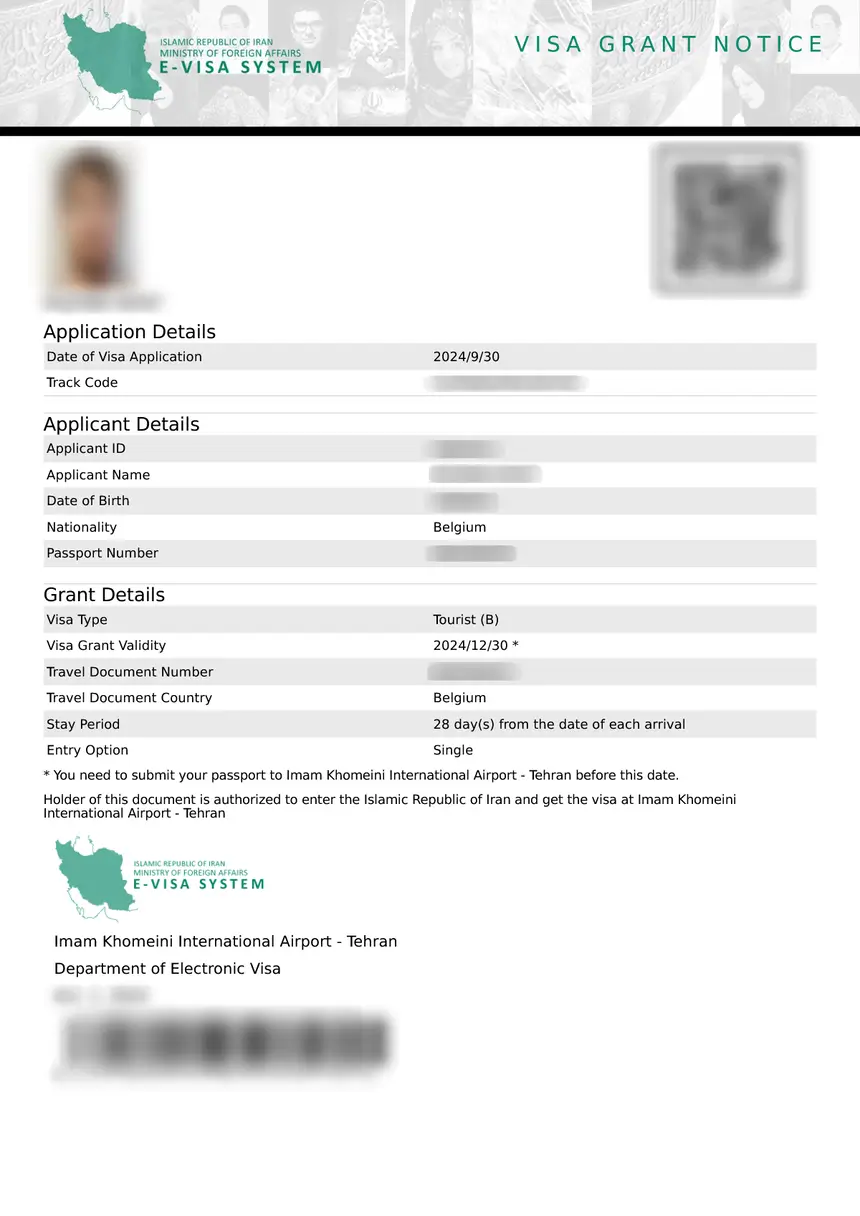
Instead of visiting an embassy in person, applicants fill out a digital form, upload required documents, and receive a visa grant notice by email. Upon arrival in Iran, travelers present this notice at the airport or border crossing to receive the actual visa sticker in their passport.
The eVisa system covers several visa types, including:
- Tourist Visa (Type B) – for sightseeing, cultural visits, and leisure travel
- Pilgrimage Visa (Type C) – for religious pilgrimages to holy sites
- Business Visa (Type D) – for business meetings, conferences, and commercial activities
- Medical Visa (Type E) – for receiving medical treatment in Iran
- Transit Visa (Type G) – for travelers passing through Iran to another destination
- Press Visa (Type F) – for journalists and media professionals
Each visa type has specific requirements and permitted durations of stay. The tourist visa is by far the most commonly issued category.
Who Needs an Iran eVisa?
Most foreign nationals require a visa to enter Iran. However, the specific requirements vary significantly depending on your nationality. Citizens of some countries enjoy visa-free entry for short stays, while others must obtain a visa before travel.
Countries with visa-free access to Iran (up to specified days):
If your country is not listed above, you need a visa to enter Iran. The eVisa system is the recommended method for most applicants.
Countries whose citizens CANNOT use the eVisa system:
Citizens of the following countries cannot apply through the online portal and must apply directly at an Iranian embassy:
- United Kingdom
- United States
- Canada
- Bangladesh
- Colombia
- Jordan
- Somalia
- Sri Lanka (for certain visa types)
For citizens of these countries, the application process involves visiting an embassy in person, and approval may require an authorization code from the MFA in Tehran.
Iran eVisa Requirements
Before starting your application, make sure you have the following documents and information ready:
Mandatory Requirements:
-
Valid Passport – Your passport must be valid for at least 6 months from the date of entry into Iran. It should have at least 2 blank pages for the visa sticker and entry/exit stamps.
-
Digital Passport Photo – A recent color photograph (taken within the last 6 months) in JPEG format. The photo should be 400×600 pixels minimum, with a white background, showing your full face without sunglasses or head coverings (except for religious reasons).
-
Scanned Passport Copy – A clear scan or photo of your passport’s bio data page (the page with your photo, name, and passport number). Accepted formats include JPEG and PDF.
-
Email Address – A valid email address where you will receive your visa grant notice. Check your spam folder regularly, as notifications sometimes end up there.
-
Travel Itinerary – While not always required at the application stage, having a rough itinerary (planned entry and exit dates, cities to visit) helps when filling out the form.
-
Accommodation Details – You may need to provide the name and address of your hotel or host in Iran. A confirmed hotel booking is helpful but not always mandatory at the application stage.
Additional Requirements (depending on visa type):
- Business travelers: An invitation letter from an Iranian company or organization
- Medical travelers: A letter from an Iranian hospital or medical center
- Journalists: Press credentials and assignment letter from your media organization
- Students: Acceptance letter from an Iranian educational institution
How to Apply for the Iran eVisa: Step-by-Step
The Iran eVisa application process is straightforward. Follow these steps carefully:
Step 1: Visit the Official MFA E-Visa Website
Navigate to the official Iranian MFA e-visa portal at e_visa.mfa.ir. Be cautious of third-party websites that charge additional service fees. The official portal is the most reliable source.
Step 2: Create an Account
Click on “Apply for Visa” and register with your email address. You will receive a verification email. Click the link to activate your account.
Step 3: Select Visa Type
Choose the appropriate visa category. For most tourists, this will be “Tourist Visa (Type B).” Select your nationality and the Iranian embassy or consulate where you wish to collect your visa (this can be an airport or land border crossing).
Step 4: Fill Out Personal Information
Enter your personal details exactly as they appear on your passport:
- Full name (first name, surname)
- Date of birth
- Place of birth
- Nationality
- Passport number
- Passport expiry date
- Father’s name (required for all applicants)
- Marital status
- Occupation
Important: Double-check all information. Any discrepancy between your application and passport can result in delays or rejection.
Step 5: Upload Documents
Upload the required documents:
- Passport scan (bio data page)
- Digital passport photo
Ensure the files meet the size and format requirements. The system typically accepts JPEG files up to 500KB and PDF files up to 1MB.
Step 6: Provide Travel Details
Enter your planned entry date, entry point (airport or border crossing), and intended duration of stay. You will also need to provide your accommodation details in Iran.
Step 7: Review and Submit
Review all entered information carefully. Once you submit the application, you cannot make changes without contacting the MFA. After submission, you will receive a confirmation number.
Step 8: Wait for Processing
Processing typically takes 2 to 10 business days, although it can take longer during peak travel seasons or for certain nationalities. Some applicants report receiving approval within 24 hours, while others wait up to 3 weeks.
Step 9: Receive Visa Grant Notice
If approved, you will receive a visa grant notice by email. This document contains a reference number and barcode. Print this document and carry it with you when traveling to Iran.
Step 10: Collect Your Visa
Upon arrival at the Iranian airport or border crossing, present your visa grant notice, passport, and passport photos to the visa counter. The officials will issue the actual visa sticker, which will be placed in your passport. You will then proceed through immigration.
Iran eVisa Fees
The Iran eVisa fees vary depending on your nationality, visa type, and duration of stay. The fees are payable upon arrival when collecting the visa sticker, not during the online application.
Typical fee ranges:
These fees are approximate and can change. Some nationalities may face higher fees due to reciprocal agreements. The fee is always paid in cash (EUR or USD) at the visa collection point.
Important: If you are obtaining your visa at an airport on arrival, some airports may charge a small additional stamp fee. Tehran Imam Khomeini International Airport (IKA) and major airports in Isfahan, Shiraz, and Tabriz have visa counters that accept EUR and USD.
Iran eVisa Processing Time
Processing times depend on several factors:
General processing times:
- Standard processing: 5-10 business days
- Fast-track (some nationalities): 2-5 business days
- Extended review (certain nationalities): 2-4 weeks
It is strongly recommended to apply at least 4 to 6 weeks before your planned travel date to allow for any unexpected delays.
Iran eVisa Validity and Duration of Stay
The Iran tourist eVisa is typically issued with the following conditions:
- Validity: 90 days from the date of issue (you must enter Iran within this period)
- Duration of stay: 30 days (can sometimes be extended to 60 days)
- Number of entries: Single entry (you cannot leave and re-enter Iran on the same visa)
If you wish to stay longer than 30 days, you can apply for a visa extension at the Iranian Immigration and Passport Police office in major cities like Tehran, Isfahan, Shiraz, or Tabriz. Extensions are granted for an additional 30 days, bringing the total maximum stay to 60 days. Some travelers report obtaining a second extension for a total of 90 days, though this is not guaranteed.
Iran eVisa Photo Requirements
The passport photo for your Iran eVisa application must meet strict specifications:
- Size: 400×600 pixels (width x height) minimum
- Format: JPEG
- File size: Under 500KB
- Background: White or light-colored
- Recency: Taken within the last 6 months
- Expression: Neutral facial expression, mouth closed
- Glasses: Remove unless medically necessary
- Head coverings: Only for religious reasons; face must be fully visible
- Resolution: Clear and in focus, no pixelation
Photos that do not meet these requirements are one of the most common reasons for application delays. If you are unsure, have your photo taken at a professional photo studio that specializes in visa photos.
Common Iran eVisa Application Mistakes
Avoid these frequent errors that cause delays or rejections:
-
Incorrect passport details – Double-check your passport number, expiry date, and full name spelling. Even a single digit error can cause problems.
-
Poor quality photo – Blurry, overexposed, or incorrectly sized photos are rejected. Follow the specifications exactly.
-
Passport validity less than 6 months – Your passport must be valid for at least 6 months from your planned entry date. Renew your passport before applying if necessary.
-
Wrong visa type selected – Make sure you select the correct visa category. Applying for a tourist visa when you need a business visa will result in complications at the border.
-
Incomplete application – Fill out every required field. Leaving fields blank or entering “N/A” where information is required will delay processing.
-
Applying too late – Start your application at least 4-6 weeks before travel. Last-minute applications risk not being processed in time.
-
Using third-party agents unnecessarily – While some travelers prefer using visa agencies, the official eVisa portal is designed for direct applications. Third-party agents charge additional fees and may not speed up the process.
-
Not checking email for updates – The MFA may request additional documents or clarification by email. Check your inbox and spam folder regularly after submitting your application.
Entry Points into Iran
Iran has several international airports and land border crossings where you can enter with an eVisa:
International Airports:
- Tehran Imam Khomeini International Airport (IKA) – the main international gateway
- Tehran Mehrabad Airport (THR) – mainly domestic, limited international flights
- Isfahan International Airport (IFN)
- Shiraz International Airport (SYZ)
- Tabriz International Airport (TBZ)
- Mashhad International Airport (MHD) – popular for pilgrimage tourism
- Kish International Airport (KIH) – Kish Island has a special free trade zone
- Bandar Abbas International Airport (BND)
- Ahvaz International Airport (AWZ)
- Lar International Airport (LRR)
- Kerman Airport (KER)
- Yasuj Airport (YES)
Major Land Border Crossings:
- Bazargan (Turkey-Iran border) – the busiest land crossing
- Norduz (Armenia-Iran border)
- Astara (Azerbaijan-Iran border)
- Bileh Savar (Azerbaijan-Iran border)
- Mirjaveh (Pakistan-Iran border)
- Taybad (Afghanistan-Iran border)
- Sarakhs (Turkmenistan-Iran border)
- Khosravi (Iraq-Iran border)
- Shalamcheh (Iraq-Iran border)
Not all border crossings process eVisas. It is recommended to confirm that your chosen entry point accepts eVisa grant notices before traveling. Major airports and the most frequently used land crossings (Bazargan, Norduz, Astara) consistently process eVisas.
Tips for a Smooth Iran eVisa Experience
Here are practical tips to ensure your application and entry go smoothly:
Before applying:
– Check if your nationality qualifies for the eVisa or if you need to apply at an embassy
– Ensure your passport has at least 6 months validity and 2 blank pages
– Prepare a digital photo that meets the exact specifications
– Have your accommodation details ready (hotel name and address)
During the application:
– Use the official MFA portal, not third-party sites
– Enter information exactly as it appears on your passport
– Save your application reference number immediately after submission
– Take screenshots of each step for your records
After approval:
– Print the visa grant notice (do not rely on a phone screenshot)
– Carry USD or EUR cash for the visa fee at the airport
– Arrive at the airport with extra time for visa processing
– Keep your hotel booking confirmation accessible
At the airport in Iran:
– Follow signs to the visa collection counter before immigration
– Present your printed visa grant notice, passport, and 1-2 passport photos
– Pay the visa fee in cash (EUR or USD)
– Wait for the visa sticker to be placed in your passport
– Then proceed to the immigration counter
Iran eVisa vs. Visa on Arrival
Iran offers both an eVisa (pre-approved online) and a Visa on Arrival (VOA) at certain airports. Here is how they compare:
The eVisa is strongly recommended over the VOA because it provides pre-approval, reducing the risk of being turned away at the airport. The VOA is available at major airports like IKA, Isfahan, Shiraz, and Mashhad, but it is not available at land border crossings.
Travel Insurance for Iran
Travel insurance is mandatory for entering Iran. Your insurance policy must:
- Cover medical expenses in Iran specifically
- Be valid for the entire duration of your stay
- Cover emergency medical evacuation
Standard travel insurance policies from companies like World Nomads, Allianz, or AXA typically cover Iran. However, some insurers exclude Iran due to sanctions. Check your policy wording carefully. If your insurance does not cover Iran, you can purchase a local insurance policy at the airport upon arrival for approximately EUR 15-30.
At the visa collection counter, officials may ask to see proof of travel insurance. Having a printed copy of your insurance certificate speeds up the process.
Dress Code and Cultural Considerations
Iran has a mandatory dress code that all visitors must follow:
For women:
– Head covering (hijab) is required in all public spaces
– Long-sleeved shirts or coats that cover the arms
– Loose-fitting clothing that covers the body
– Pants or skirts that cover the legs to the ankle
For men:
– Shorts are not acceptable in public
– Short-sleeved shirts are generally acceptable
– Avoid sleeveless shirts
These rules apply from the moment you step off the plane. Many female travelers carry a scarf in their hand luggage to put on immediately upon arrival.
Frequently Asked Questions About the Iran eVisa
How long does the Iran eVisa take to process?
Standard processing takes 5-10 business days. Some nationalities experience faster processing (2-5 days), while others may wait 2-4 weeks. Apply at least 4-6 weeks before your trip to be safe.
Can I extend my Iran eVisa once I am in the country?
Yes, you can extend your tourist visa at the Immigration and Passport Police office in major Iranian cities. Extensions are typically granted for an additional 30 days, allowing a maximum stay of 60 days. Some travelers have obtained a second extension for up to 90 days total.
Is it safe to travel to Iran as a tourist?
Iran is generally considered safe for tourists. Millions of tourists visit Iran each year without incident. However, as with any international travel, exercise common sense, stay informed about current events, and follow the advice of your country’s foreign affairs department.
Can I use a credit card in Iran?
International credit cards (Visa, Mastercard) do not work in Iran due to international sanctions. You must bring enough cash (EUR or USD) for your entire trip. Some exchange offices (sarafi) offer competitive rates in major cities. ATMs in Iran only work with domestic Iranian bank cards.
Do Israeli stamps in my passport affect my Iran eVisa application?
If your passport contains an Israeli stamp or visa, you may be denied entry to Iran. Israel has stopped stamping passports for most visitors (using entry cards instead), but if you have any Israeli markings, consider renewing your passport before applying for an Iran visa.
Can US, UK, or Canadian citizens get an Iran eVisa?
US, UK, and Canadian citizens cannot use the standard eVisa portal. They must apply through an Iranian embassy and require a pre-arranged guided tour or authorized travel agency. Individual travel is restricted for these nationalities. The process takes longer (4-8 weeks) and requires additional documentation.
What happens if my eVisa application is rejected?
If your application is rejected, you will receive a notification by email. Rejection reasons are not always disclosed. You can reapply after addressing potential issues (correcting information, providing additional documents) or apply at an Iranian embassy in person. Common rejection reasons include incomplete applications, insufficient passport validity, and security-related concerns for certain nationalities.
Can I enter Iran multiple times with one eVisa?
The standard tourist eVisa is a single-entry visa. If you leave Iran and wish to return, you must apply for a new visa. Some travelers who plan to visit neighboring countries (like Turkey or Armenia) and return to Iran apply for a double-entry or multiple-entry visa, but these are harder to obtain and require specific justification.
Conclusion
The Iran eVisa system has made traveling to Iran significantly more accessible for most nationalities. By following the steps outlined in this guide, preparing your documents in advance, and applying well before your travel date, you can ensure a smooth visa process. Iran offers incredible historical sites, warm hospitality, and a rich cultural experience that makes the visa application process well worth the effort.
Remember to always use the official MFA portal for your application, double-check all information before submitting, and carry printed copies of your visa grant notice and travel insurance when you travel. With proper preparation, your Iran eVisa application should be a straightforward process, and you will be ready to explore one of the world’s oldest and most fascinating civilizations.